
When you see a drilling rig in action, it’s easy to focus on the powerful machine itself. But the real magic—and the key to productivity—happens at the bottom of the hole. The synergy between the Down-The-Hole (DTH) Hammer, the Button Bit, and the Drilling Pipe is what turns brute force into efficient, precise drilling.
If you’re new to the field or just need a refresher, let’s break down this essential trio and how they work together.
1. The Drilling Pipe: More Than Just a Connector
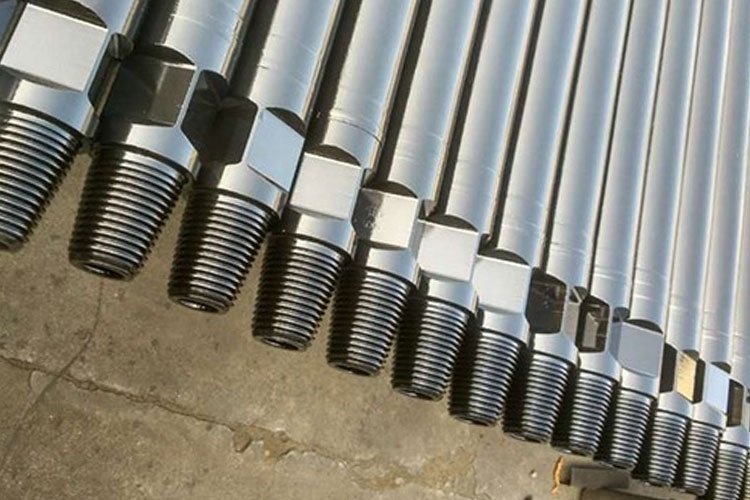
Think of the drilling pipe (or drill string) as the backbone of the entire operation. It’s not just a simple tube; it’s a high-strength conduit for two critical things:
- Power Transmission: It connects the rig’s top-head or rotary head to the hammer and bit, transmitting the necessary thrust, rotation, and torque.
- Air Delivery: Its hollow core allows compressed air to travel from the rig’s compressor down to the DTH hammer.
Key Features of a Good Drilling Pipe:
- Strength: Made from high-quality, heat-treated alloy steel to withstand immense pressure, tension, and torsion.
- Durable Threads: The threaded connections are precisely machined to handle high torque and prevent failure at the joints.
- Straightness: A straight pipe ensures smooth rotation and prevents unnecessary wear on the threads and the hammer.
A weak or misaligned drill pipe can lead to poor drilling performance, crooked holes, and costly downtime.
2. The DTH Hammer: The Heart of the Percussion System
Nestled at the bottom of the drill string, the DTH hammer is the powerhouse. The high-pressure air from the drill pipe activates a piston inside the hammer, which drives forward at high speed and strikes the shank adapter (which is connected to the bit).
- How it Works: This rapid, repeated percussion is what generates the powerful impact energy needed to break rock. The exhausted air then flushes the crushed cuttings out of the hole, keeping it clean and allowing the bit to strike a fresh rock surface with every blow.
Why DTH? DTH hammers are highly efficient because the impact occurs directly at the bit, deep in the hole. This minimizes energy loss compared to top-drive systems, especially in deep or hard rock formations.
3. The Button Bit: The Cutting Edge
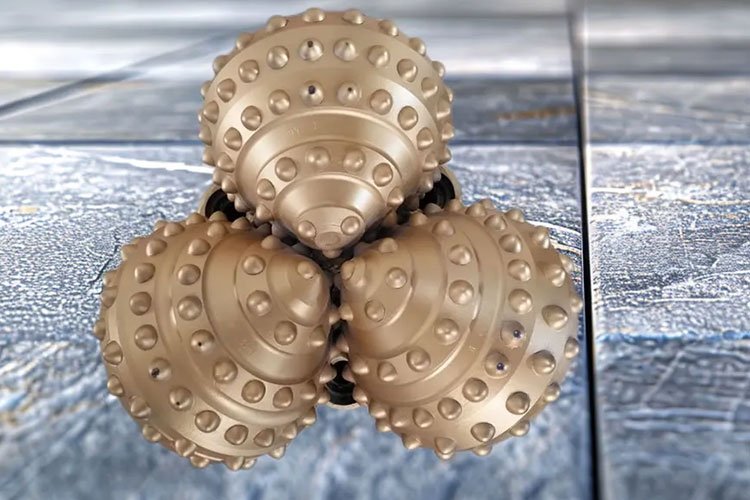
This is the business end of the operation. The Button Bit is attached to the bottom of the DTH hammer. It’s fitted with multiple hardened, tungsten-carbide “buttons” that are precisely arranged across its face.
- The Process: As the DTH hammer’s energy is transferred to the bit, these buttons are smashed into the rock, crushing it through compressive force. The rotation of the drill pipe ensures that every button covers a new section of rock, creating a perfectly round hole.
- Button Design: The shape and size of the buttons vary (e.g., spherical, ballistic, conical) to suit different rock types—from soft and abrasive to extremely hard and competent.
The Perfect Sync: Why All Three Must Work Together
You can’t have one without the others. This system is a perfect example of interdependence:
- The Drilling Pipe delivers air and rotation.
- The DTH Hammer converts that air into percussive energy.
- The Button Bit uses that energy to efficiently fracture the rock.
Getting the Match Right:
- Air Pressure & Volume: Your drill pipe’s internal diameter must be sufficient to deliver the required CFM (Cubic Feet per Minute) and PSI (Pounds per Square Inch) that your specific DTH hammer needs to operate optimally.
- Size Compatibility: The hammer and bit must be of the same designated size (e.g., a 6-inch hammer requires a 6-inch bit).
- Thread Integrity: The threads connecting the pipe to the hammer must be clean, properly greased, and torqued to the manufacturer’s specification to prevent thread “washout” or breakage.
Best Practices for Maximizing Performance and Lifespan
- Use a Shock Sub: Install a shock sub (or dampener) between the top of the drill string and the rig. This absorbs harmful reverse shockwaves, protecting both your pipes and the rig’s top-head.
- Keep it Clean: Always use clean, dry air. Moisture and contaminants can severely damage the internal parts of the DTH hammer.
- Mind the Alignment: Ensure your drill string is straight and the rig is properly set up. Misalignment causes premature and uneven wear on the buttons, the hammer, and the pipe threads.
- Sharp Bits are Happy Bits: Don’t run a bit until it’s completely worn out. Resharpening (or “gringing”) the buttons at the right time can significantly extend the bit’s life.
In Conclusion
The next time you’re on a drill site, remember that the drill pipe, DTH hammer, and button bit are a single, integrated system. Investing in quality components, ensuring they are perfectly matched, and following proper operating procedures is the surest path to achieving faster penetration rates, longer tool life, and a healthier bottom line.